

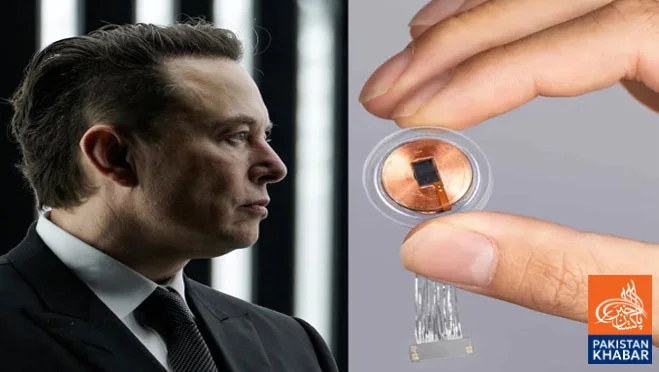
Washington (Web Desk): US-based technology company Neuralink has received permission from the US Food and Drug Administration (FDA) to begin an important clinical trial of a specialised brain implant. The study will evaluate the safety and effectiveness of the company's brain-computer interface technology in people suffering from severe disabilities and paralysis caused by the neurological disease ALS.
According to Elon Musk's company Neuralink, the research has been named the "Link Pivotal Study." Its primary objective is to determine whether people with severe physical disabilities can operate computers and other electronic devices using their thoughts alone, and to what extent this technology can improve their independence in everyday life.
The company's brain-computer interface system is implanted in the part of the brain responsible for planning physical movements. The small device, called "N1," is placed inside the skull, while extremely thin electrical threads connected to it extend into the brain. The device reads brain activity and identifies signals associated with the intention to move, enabling paralysed individuals to control digital devices through their thoughts.
According to Neuralink, the new study will examine how effectively participants can use computers and other electronic devices through brain signals. It will also assess the long-term safety and reliable performance of the implants being installed at different medical centres.
The company says that more than 30 people have so far received the implant during preliminary studies being conducted in the United States, Canada and the United Kingdom. These individuals have used the technology to perform various activities, including communicating with family members, continuing higher education and playing video games.
Neuralink has announced that registration for participation in the new clinical trial has begun. However, details regarding the total number of participants, the expected duration of the research and the medical centres involved have not yet been disclosed. It is important to note that the US regulatory authority's approval is only for conducting the clinical trial and does not mean that the company has also been authorised to sell the device commercially.
Other Neuralink Research into Brain Technology
Neuralink is also conducting several studies into different medical applications of its brain devices. Earlier this week, the company received a legal patent right from the United States Patent and Trademark Office for a brain-computer interface system that proposes using living nerve cells to transmit signals between the brain and external devices.
The invention, named the "Cellular Brain-Computer Interface," describes an alternative to the existing technology based on electrical threads. Preliminary experiments related to this concept were conducted on rats; however, clinical trials involving humans have not yet taken place.
The company's "PRIME" study is also ongoing in the United States, examining the safety of the N1 brain implant and the R1 robotic system used to install it. An important objective of this research is to assess how effectively paralysed individuals can control external devices through the brain implant.
In 2024, Neuralink launched another study called "CONVOY" to determine whether participants in the PRIME study could use physical assistive devices, including robotic arms, through the brain implant.
The company is also conducting a study called "VOICE" in collaboration with UT Southwestern Medical Center in Dallas, Texas. Its objective is to explore ways of enabling people who have lost their ability to speak due to severe disabilities to communicate through written messages or computer-generated speech using brain signals.
In Canada, research named "CAN-PRIME" is underway at Toronto Western Hospital, part of the University Health Network. The study received approval from Health Canada in November 2024. Similarly, an initial study called "GB-PRIME" is being conducted in the United Kingdom under the leadership of University College London Hospitals.
Neuralink is also working on applications of its technology for people with visual impairments. For this purpose, its device called "Blindsight" was granted the FDA's Breakthrough Device designation in September 2024.