

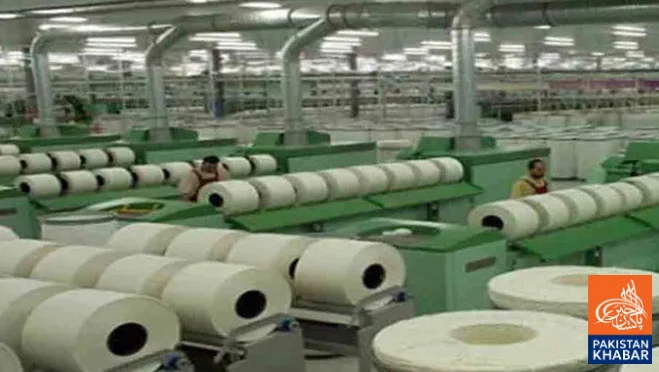
Karachi (Commerce Desk): Pakistan’s textile and apparel exports increased by 0.3 percent to $18 billion in fiscal year 2025-26, reaching their highest level in four years.
According to the Pakistan Textile Council’s first annual export performance report, total national exports declined by 5.9 percent to $30.14 billion, while the textile sector’s share in the country’s exports reached approximately 60 percent.
According to the report, the increase in exports was primarily driven by apparel and home textile products, whose exports rose by 1.1 percent to $14.98 billion, accounting for 83.2 percent of total textile exports. Non-knit apparel exports increased by 3.9 percent to a record $4.295 billion, while home textile products remained the largest single segment at $5.705 billion.
On the other hand, exports of raw materials and intermediate products declined by 3.4 percent to $3.03 billion, their lowest level in five years, while knitwear exports also fell by 0.7 percent to $4.979 billion.
The European Union remained the largest market for Pakistani textile products at $7.103 billion, while exports to the United States stood at $4.853 billion, the United Kingdom at $1.730 billion, China at $644 million and Bangladesh at $620 million.
Pakistan Textile Council Chief Executive Officer Muhammad Hassan Shafqat said the modest increase in exports demonstrates the sector’s ability to maintain global competitiveness; however, the low cotton production remains a concern. Cotton production stood at 5.5 million bales in the previous season, the lowest level in three decades, compared with a peak of 14.8 million bales in 2011-12.
The council has presented 11 recommendations to improve export competitiveness, including tax reductions, faster payment of refunds, competitive energy tariffs, improved financial facilities, easier access to credit for small and medium-sized businesses, continuation of GSP Plus status, and free trade agreements with the United States and the United Kingdom.
For the cotton sector, the council has also proposed a national strategy based on quality seeds, digital registration of farmers and traceability of production.