

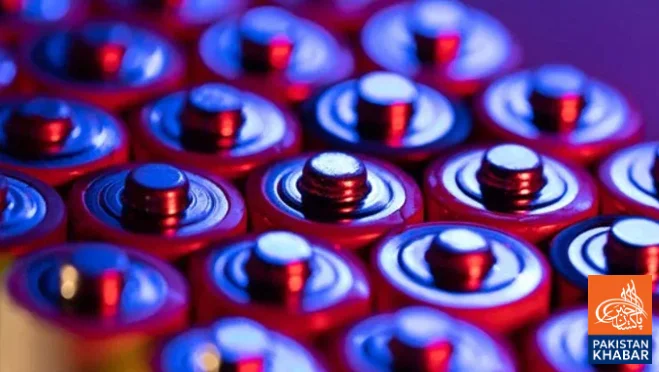
Beijing (Web Desk) – Chinese scientists have developed a new aluminum-based catalyst, paving the way for extending the lifespan and improving the performance of sodium-sulfur batteries.
According to researchers at the Chinese Academy of Sciences, one of the major problems with sodium-sulfur batteries is the migration of sodium polysulfides from the cathode to the other side, which affects battery performance and reduces its lifespan.
The research team modified the atomic structure of aluminum by replacing one oxygen atom with nitrogen, resulting in a new aluminum-sulfur structure called Al–O3N. This modification strengthened the chemical interaction between aluminum and sulfur, improving the speed and stability of chemical processes inside the battery.
During laboratory experiments, the battery retained a capacity of 1,196 milliampere-hours per gram even after 100 charge and discharge cycles. In addition, the battery completed a total of 2,500 charge and discharge cycles, with a performance degradation rate of only 0.017 percent per cycle.
Researchers say this scientific breakthrough could play an important role in developing more durable, longer-lasting and higher-performance sodium-sulfur batteries.
According to the research, aluminum is an inexpensive and abundantly available metal, and its use has also opened up possibilities for reducing dependence on expensive metals in battery manufacturing.