
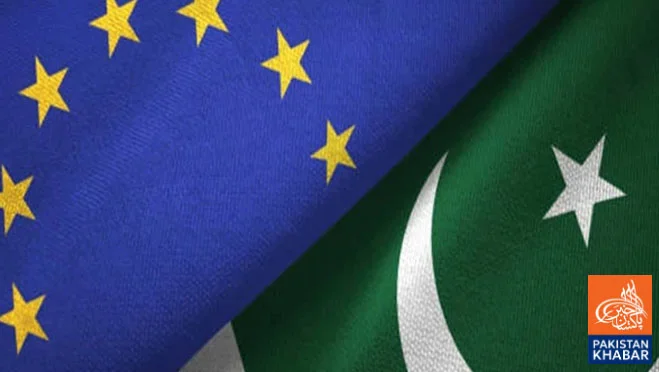
Islamabad (Commerce Desk): The European Union’s review report on the GSP+ (Generalised Scheme of Preferences Plus) preferential trade scheme for Pakistan has presented a balanced but cautious assessment of the country’s performance. The report appreciates progress made in certain areas of human rights and legislation; however, it has also raised significant concerns regarding political rights, judicial independence, enforced disappearances, media freedom, and freedom of expression.
The European Union’s report clarifies that it does not recommend ending the GSP+ facility for Pakistan; however, it also does not declare the country’s overall performance completely satisfactory. According to the report, Pakistan has taken positive steps to strengthen human rights institutions, establish the National Commission for Minorities, limit the scope of the death penalty, maintain an unofficial moratorium on executions, implement anti-torture laws, and prevent violence against women.
On the other hand, the European Union has expressed concerns regarding political freedoms, judicial independence, enforced disappearances, media freedom, blasphemy laws, counter-terrorism measures, and the use of cybercrime laws.
The report stresses that along with the ratification of international agreements, effective implementation of laws is also essential, particularly because new EU GSP regulations will come into force from January 1, 2027. These regulations include stricter requirements related to sustainability and good governance.
According to the report, the GSP+ scheme has proven highly beneficial for Pakistan. During 2024 alone, Pakistan exported goods worth approximately €7.5 billion under this facility, while the estimated value of tariff concessions stood at €732 million.
Analysts believe that GSP+ should be viewed as a transitional arrangement rather than a permanent facility, as these concessions are conditional and unilateral in nature and can be suspended or restricted by the European Union at any time. The new GSP+ scheme places greater emphasis on stricter conditions and effective implementation.
Experts say Pakistan should move towards reforms in its trade policy, reduction of tariffs, and making the economy more competitive, while also pursuing comprehensive free trade agreements with the European Union and other countries. This would help promote the country’s exports on a more sustainable and diversified basis.