

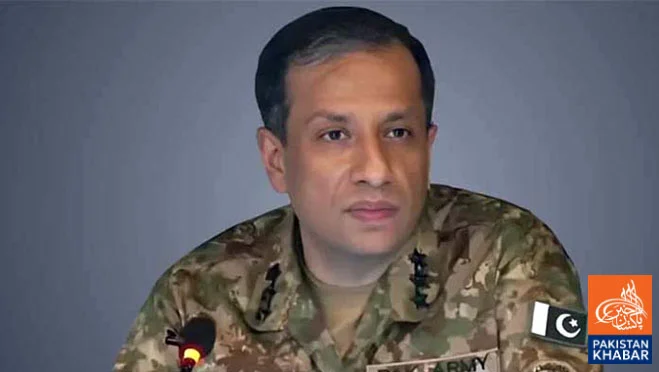
Rawalpindi (Pakistan News): Director General of Inter-Services Public Relations (ISPR) Lieutenant General Ahmed Sharif Chaudhry has said that resolving the conflict in the Middle East through negotiations is essential. However, if talks fail and military confrontation occurs, the Makkah Alliance’s collective defence system will be activated.
In an interview with an Arab television channel, the DG ISPR said significant progress had been made on the Makkah joint defence agreement in a very short period. He added that the agreement was the result of a shared vision among three countries.
He made it clear that safeguarding Saudi Arabia’s sovereignty, territorial integrity and the Two Holy Mosques was among Pakistan’s top priorities. He said no compromise could be made on protecting the holy sites and that Pakistan’s position on the matter was clear and unequivocal. According to him, Pakistan’s political leadership and the Field Marshal had also conveyed their messages on the issue.
Lieutenant General Ahmed Sharif Chaudhry said the public, political leadership and military leadership were deeply angered by attacks on holy sites. He added that escalating conflicts to any level would benefit no country.
He said further expansion of the military conflict in the Middle East was in no one’s interest, making it necessary to reach a settlement through negotiations. However, if a negotiated solution failed and military confrontation became a reality, the Makkah Alliance’s collective defence system would come into operation.
The Pakistan Army spokesperson said the Makkah Alliance had clear leadership and a defined course of action, and that it had no aggressive intentions. Pakistan, Saudi Arabia and Türkiye, he said, sought peace, stability and prosperity in the region.
He further stated that the alliance was not directed against any particular country. Its purpose was to promote peace, stability and security across the region. Muslims, he added, needed to unite rather than engage in conflict with one another.