

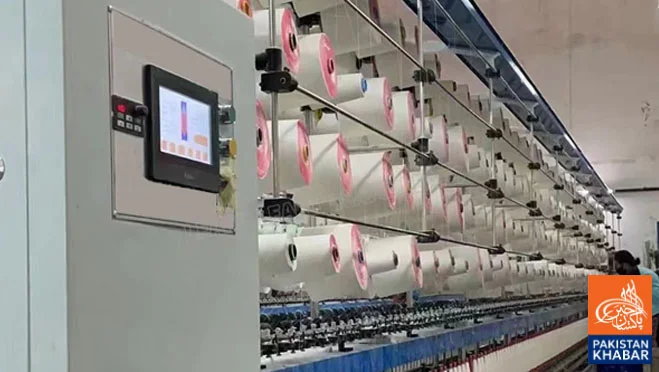
Karachi (Business Desk): Pakistan’s cotton industry is facing severe difficulties due to economic uncertainty, heavy taxation, and high energy costs. Following the closure of hundreds of cotton ginning factories and textile mills, more than 40% of the country’s power looms have also become non-operational.
Ehsan-ul-Haq, chairman of the Cotton Ginners Forum, has urged federal and provincial governments to introduce farmer-friendly and industry-friendly policies to revive the cotton and textile sectors.
He said the survival of Pakistan’s domestic cotton industry was facing serious threats because production costs were higher than those in competing countries. High electricity and gas tariffs for industries, elevated interest rates on loans, and heavy taxes had undermined the competitiveness of Pakistani products. As a result, the country has continued to experience declining exports and rising imports over the past several years.
According to Ehsan-ul-Haq, unfavorable weather conditions have affected cotton quality, leading to an upward trend in cotton imports and prices.
He explained that the continued decline of the domestic cotton industry had initially rendered more than 500 cotton ginning factories and approximately 200 textile mills non-operational. Now, more than 40% of power looms have also shut down in Faisalabad and other cities across the country.
The decline in industrial activity is not only increasing unemployment but also adversely affecting gross domestic product and overall economic growth.
The chairman of the Cotton Ginners Forum stressed that federal and provincial governments must take urgent measures to reduce industrial production costs, reopen closed industrial units, and restore their contribution to the national economy.
He further revealed that, for the first time in the country’s history, temperatures of up to 38 degrees Celsius were recorded in various areas, including Rahim Yar Khan, as late as the second week of October. These unusually high temperatures have had extremely adverse effects on the cotton crop.