

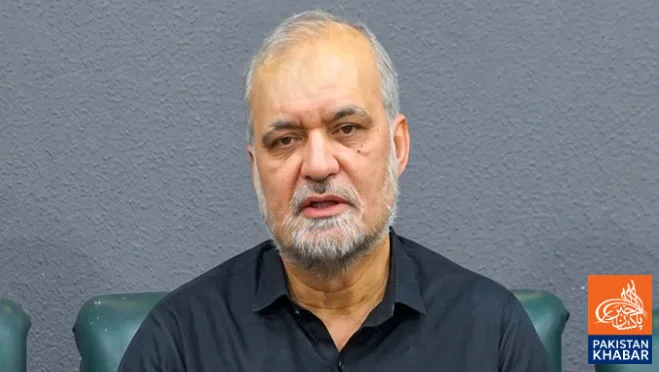
Karachi (Pakistan Khabar): Jamaat-e-Islami Pakistan chief Hafiz Naeem ur Rehman has questioned how oil refineries recorded an 1,100% increase in profits compared with the previous year, despite the entire burden of the global crisis being shifted onto the public. He said inflation, expensive petrol and power outages have created difficulties for the public and industries.
Addressing a press conference, Hafiz Naeem ur Rehman said the government was responsible for providing relief to the public under the current circumstances, but its measures were contributing to the worsening crisis. According to him, the ruling classes have failed to govern the country, while the bureaucracy and influential mafias exploit crises for their benefit and the public bears the consequences.
He said the petroleum levy had not been abolished despite the increase in global petroleum prices. The government was collecting Rs150 billion under this levy but spending only Rs21 billion on providing relief to the public. The government had promised to expand the relief programme but had shown no willingness to abolish the levy.
Hafiz Naeem ur Rehman announced that a long march against the petroleum levy was expected in mid-November, with a final decision to be made in light of the situation at the time. He added that liquefied petroleum gas (LPG) prices were also becoming unaffordable for the public.
According to the Jamaat-e-Islami chief, an increase in interest rates places an additional burden on the economy, which the public and business community are forced to bear. He said banks lend money to the government using public funds, while the government collects revenue through the levy to make payments. He also criticised political parties for failing to speak out against mafias.
Hafiz Naeem ur Rehman said the government had failed to rein in feudal landlords and the sugar, flour, gas and refinery mafias. According to him, profits for oil refineries, oil marketing companies and petroleum dealers increased during the crisis, while the public bore the burden. He urged the government to take effective measures to curb profiteering and provide relief to the public.
He said high petrol and electricity prices were affecting both large and small industries, while increases in petrol prices also drove up food prices. According to him, although LPG should cost around Rs250, it was being sold in the market for Rs500 to Rs600. He said the government's responsibility was not limited to conducting operations; it must also control market prices and provide relief to the public.
Hafiz Naeem ur Rehman further said that a 0.5% increase in the policy rate had heightened concerns among industrialists and exporters. The government had promised to bring the interest rate down to single digits, but the increase had intensified concerns within the business community. He said the government was aware of the causes of inflation but was failing to take effective measures to provide relief to the public.