

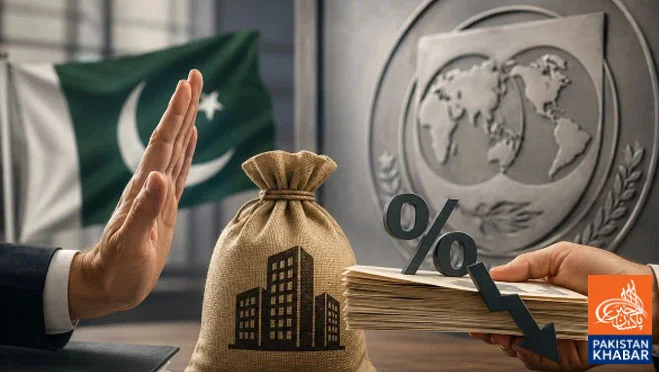
Islamabad (Commerce Desk) — Pakistan is entering the final year of the 37-month, $7 billion IMF Extended Fund Facility program, giving the country an important opportunity to move its economy away from repeated IMF programs.
Although the economic situation is still not completely free of risks and fundamental weaknesses that could trigger a balance of payments crisis remain, Pakistan is currently in a much better position compared with the economic crisis of 2023.
The State Bank’s foreign exchange reserves have reached approximately $21.4 billion, while total liquid reserves, including those held by commercial banks, have reached $26.8 billion. The central bank’s reserves are sufficient to cover nearly three months of import requirements.
Pakistan has also regained access to international capital markets. In September, the country raised $3 billion through a two-part Eurobond, for which offers worth approximately $6 billion were received. This indicates that international investors are once again willing to lend to Pakistan.
A proposed $10 billion foreign exchange stabilization facility from the United States could also provide additional financial protection for Pakistan. If the proposal is approved, it is expected to provide financial support as well as further strengthen confidence in the international market.
In fiscal year 2026, remittances from overseas Pakistanis reached a record $41.6 billion, compared with $27.3 billion three years earlier. During the same period, services exports also exceeded $10 billion, with information technology and digital services playing a prominent role.
Information and communications technology exports reached approximately $4.6 billion in fiscal year 2026, recording annual growth of more than 20 percent. Pakistan’s current account also remained in surplus or near balance for the first time in 14 years instead of remaining in continuous deficit.
The government has also maintained a primary budget surplus, while the rapid expansion of solar energy has helped reduce dependence on imported fuel. As a result, the annual energy import bill is expected to decline by approximately $5 billion to $8 billion, depending on global crude oil prices.
However, merchandise exports remain a weak area. Pakistan’s merchandise exports have remained between $25 billion and $32 billion for approximately 15 years, while the trade deficit continues due to rising imports.
Pakistan is currently in the second year of a five-year trade liberalization program, and its effects are expected to begin emerging over the next two to three years in the form of increased exports and a reduction in the trade deficit.