

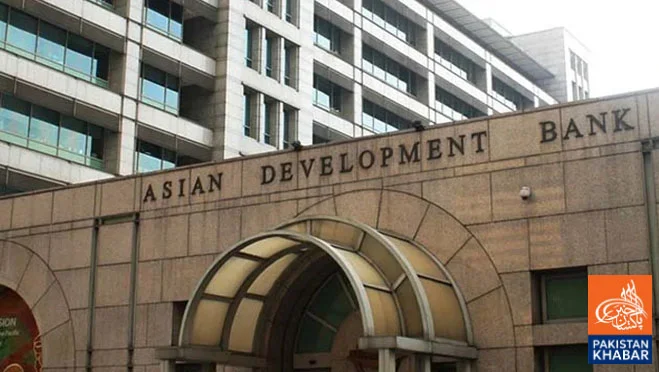
Islamabad (Commerce Desk): The Asian Development Bank has released a report on Pakistan’s economic situation, stating that continued reforms and strong foreign exchange reserves have contributed to economic stability.
According to the report, Pakistan’s economic performance continued to improve during the last fiscal year, while the growth rate increased from 3.2 percent in fiscal year 2025 to 3.7 percent in fiscal year 2026. Along with recovery in the services and industrial sectors, agriculture also improved; however, the conflict in the Middle East affected economic activity during the final quarter of the fiscal year.
The ADB has also projected the growth rate to remain at 3.7 percent in fiscal year 2027. The report described economic reforms, strong foreign exchange reserves and renewed access to global capital markets as positive developments.
According to the report, an improved sovereign credit rating is expected to increase private investment; however, expensive energy and global uncertainty could limit the pace of economic growth.
The ADB said that expansion in the manufacturing and services sectors strengthened the economy during fiscal year 2026, while agriculture grew by 2.9 percent despite floods. Private investment increased by 8.6 percent due to lower interest rates and improved business confidence.
According to the report, the process of fiscal consolidation continued during fiscal year 2026, while total foreign exchange reserves increased. Due to improved economic stability and stronger external reserves, S&P upgraded Pakistan’s rating in July, while Moody’s upgraded it in August 2026.
Pakistan also regained access to global capital markets by issuing Eurobonds and Panda bonds in April and May 2026.
According to the ADB, average inflation stood at 7.1 percent in fiscal year 2026, compared with 4.5 percent in the previous fiscal year, while inflation is expected to rise to 8.3 percent in fiscal year 2027.
The report warned that an escalation in the Middle East conflict could increase energy import costs and inflation, while remittances could also decline if Gulf economies are affected.
The ADB said that government austerity, tightening global financial conditions, a decline in tax revenues, agricultural losses caused by climate change and delays in energy reforms pose risks to economic growth. It said that continued reforms are extremely important for maintaining investor confidence and strengthening fiscal and external stability.