

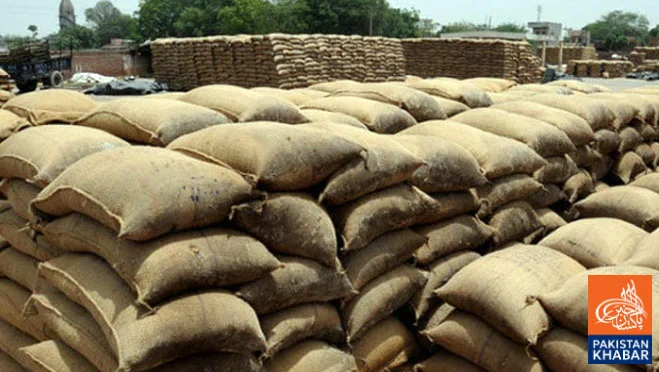
Lahore (Commerce Desk): The aggregator system introduced for wheat procurement from farmers in Punjab has failed to achieve the desired results, due to which the government could not meet its target of purchasing at least 1.5 million tonnes of wheat.
According to the report, farmers who sold wheat immediately after harvesting received a price of Rs3,000 to Rs3,100 per maund, while the benefit of rising prices in the open market was mostly gained by large farmers, traders, and stockists who stored wheat.
Considering the current situation, the Food Department has started preparing a new multi-dimensional system for future wheat procurement, which will include the Electronic Warehouse Receipt (EWR) system along with aggregators and a new procurement model.
Sources said that instead of abolishing the Punjab Food Department, the government is considering its restructuring, under which proposals are being reviewed to change the department’s name, positions, responsibilities, and administrative structure.
According to agricultural and economic experts, the Punjab government experimented with 11 selected companies, known as aggregators, for wheat procurement this year. However, due to objections and additional requirements from commercial banks, the procurement process started two to three weeks late.
Experts said that during this period, wheat prices in the market exceeded the official rate of Rs3,500, while following reports of a decline in wheat production, traders, stockists, and large landowners began storing wheat to sell it later at higher prices.
On the other hand, despite official checkpoints, reports emerged that millions of tonnes of wheat were transported to Sindh and Khyber Pakhtunkhwa, which increased pressure on Punjab’s open market.
Despite the federal government’s announcement to import 1 million tonnes of wheat, prices in the market could not be reduced. Experts say this is the first time that the country has required wheat imports just a few months after the arrival of the crop.