

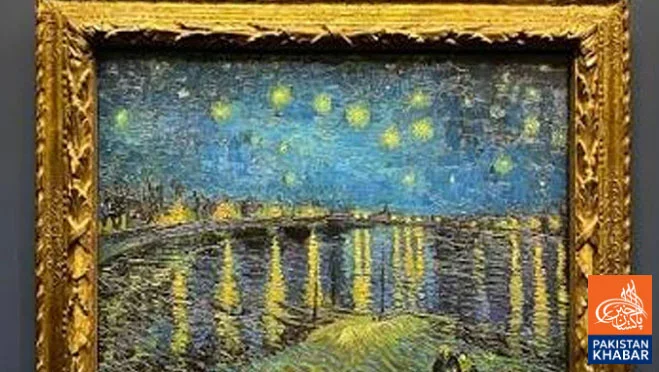
California (Web Desk): Scientists have claimed in a new study that Vincent van Gogh’s iconic 1889 painting The Starry Night depicts a pre-dawn sky over Saint-Rémy in France, around July 22, 1889.
Researchers analyzed the celestial scene in the painting using various scientific methods to determine which real-life view of the sky the artist had transferred onto the canvas.
Astronomers have been trying for decades to interpret the stars and celestial patterns depicted in the painting. Two major research studies on the subject were published in the mid-1980s, but their findings differed. In subsequent years, greater attention shifted toward the painting’s symbolic meaning rather than a scientific interpretation of its celestial scene.
According to the lead author of the new study, the idea for the research came to him after he viewed the painting and found the existing interpretations of its sky unsatisfactory.
Elijah Jeong-Hyeon Kim, a PhD student at Kyung Hee University in South Korea, said that when he examined the painting as an observational astronomer, he recognized the Hyades star cluster in the constellation Taurus. However, after reading earlier studies that had identified the constellation as Aries, he felt as though the painting was drawing him toward it.
After identifying the location where the painting was created, the researchers analyzed its various features. They sought to determine whether the five prominent central stars depicted in the painting corresponded to the stars visible in the sky on that night.
According to the study, a pen-and-ink sketch that Van Gogh produced after creating the famous painting corresponds even more closely to the actual night sky in question.