
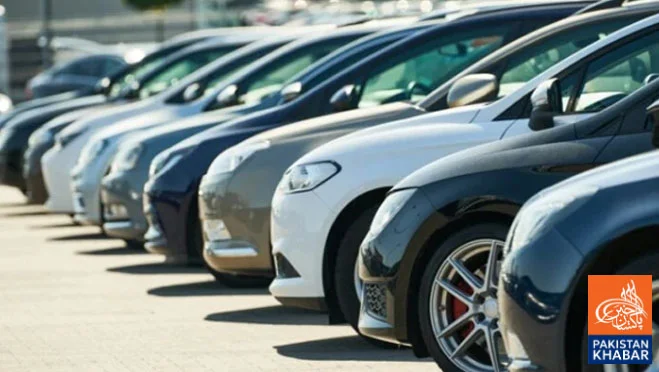
ISLAMABAD (Commerce Desk): The government has so far failed to reach consensus on the new auto policy. The Ministry of Industries has proposed reducing protective tariffs on imported vehicles by 52 percent by 2030, but the proposed customs duties are still up to 300 percent higher than those approved under the federal government’s National Tariff Policy.
According to sources, several meetings of the ministerial committee formed to prepare the Auto and Auto Parts Policy for 2026-2031 have been held, including a meeting on Thursday, but the parties have yet to reach a final decision.
The committee, headed by Federal Minister for Energy Sardar Awais Leghari, also includes foreign experts. The Ministry of Industries presented new tariff proposals at the meeting, showing some flexibility compared with its earlier position. However, even after keeping federal excise duty separate, the proposed customs duties remain significantly higher than the rates set under the National Tariff Policy.
Under the National Tariff Policy, the maximum customs duty has been set at 15 percent by 2030. Meanwhile, the Ministry of Industries has proposed retaining a 60 percent duty on vehicles with engine capacities of 1,501 to 1,800 cc. This rate is 300 percent higher than the national policy, but 34 percent lower than the current rate.
Sardar Awais Leghari said implementation of the National Tariff Policy was necessary, but energy costs, taxes, and other competitive factors would also have to be taken into consideration. According to him, tariffs are only one part of the policy, while improving standards, honoring agreements, and reducing vehicle prices for consumers are also key objectives of the new policy.
On the other hand, the Ministry of Industries says that merely removing protective tariffs cannot create effective competition in the market. It says the local industry must also be provided with other facilities, including lower energy costs, a stable tax system, reasonable interest rates, and a stable exchange rate.