

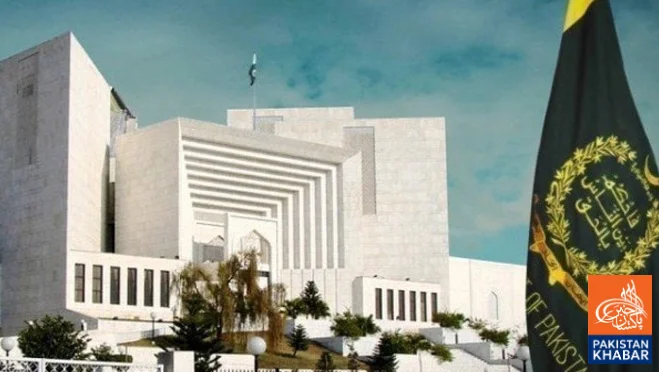
Islamabad (Pakistan Desk): The Supreme Court has ruled that the state has the authority to acquire land for public purposes, but property owners must receive full, fair, and market-based compensation in accordance with the Constitution.
The Court clarified that the government may acquire land without the owner’s consent, but this power is not unlimited. It stated that Articles 23 and 24 of the Constitution protect citizens’ property rights and place legal limits on the state’s authority.
In the judgment authored by Justice Muhammad Ali Mazhar, the Court said compensation cannot be determined solely on the basis of official rates. It must also take into account the market value of the land, its potential use, future development prospects, and the effects of inflation and price increases during delays in the acquisition process.
The judgment stated that “the landowner should receive gold for gold, not copper,” emphasizing that compensation must fully offset the financial loss suffered by a citizen whose property is acquired in the public interest.
The Supreme Court further observed that Article 23 guarantees every citizen the right to acquire, own, sell, and transfer property in Pakistan, while Article 24 provides that no person may be deprived of property except in accordance with the law and upon payment of appropriate compensation.
The ruling was issued in a case concerning compensation for land acquired for an irrigation canal project in Swabi, where landowners challenged the government’s compensation as inadequate.
The Reference Court had enhanced the compensation based on evidence, and the Peshawar High Court later upheld that decision. The Khyber Pakhtunkhwa government appealed to the Supreme Court, but the apex court dismissed all appeals and upheld the High Court’s ruling.
The Supreme Court stressed that fair compensation is a constitutional right of every affected citizen and that the state is obligated to protect this right whenever land is acquired for public purposes.