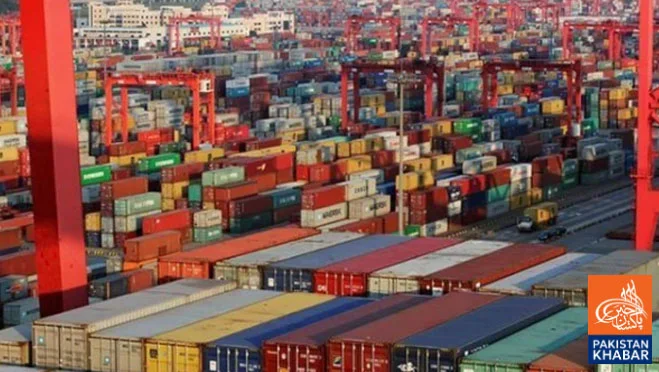
Faisalabad (Commerce Desk): Pakistan’s export industry, particularly the textile, sports goods, and leather sectors, has entered a phase where environmental performance is no longer merely a matter of business reputation but is increasingly becoming an important requirement for maintaining access to major global markets.
Pakistani exports are already under pressure due to expensive energy, financial difficulties, weak infrastructure, and government policies. Under such circumstances, shifting toward cleaner and low-carbon production could provide the industry with an opportunity to increase competitiveness on one hand, while also becoming an additional financial burden on the other. This will depend on how the costs of the transition are distributed.
According to data from the Pakistan Bureau of Statistics, textile and apparel exports stood at $17.93 billion in fiscal year 2025-26, although only a 0.26 percent increase was recorded.
During July to March of fiscal year 2025-26, the textile and apparel sector accounted for 59.7 percent of Pakistan’s total exports. The European Union is Pakistan’s largest export market, where textiles and apparel account for approximately 70 to 76 percent of the country’s total exports.
Pakistan is also the largest beneficiary of the European Union’s GSP Plus program. Under this program, Pakistan received tariff concessions worth approximately €732 million in 2024. In such circumstances, progress toward low-carbon production and sustainable supply chains is of direct economic importance to Pakistan.