

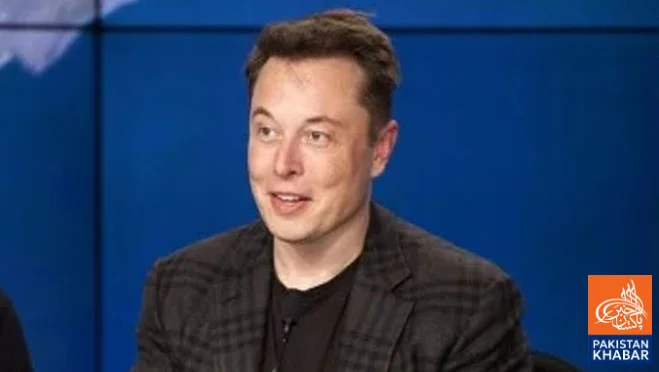
Texas (Web Desk) — Tesla and SpaceX founder Elon Musk has claimed that rapid advancements in artificial intelligence and robotics could fundamentally transform the current economic system and the importance of traditional money within the next decade.
In an interview with The Economist editor-in-chief Zanny Minton Beddoes at Tesla’s Texas Gigafactory, Elon Musk said that artificial intelligence could surpass overall human intelligence in the coming years. According to him, if superintelligence is combined with humanoid robots, billions of automated machines could become capable of producing goods at extremely low costs, creating a new and expanded economic world.
Elon Musk stated that when basic necessities such as food, housing, transportation, and entertainment become available at extremely low costs and with greater ease, the importance of the existing financial system could decline. He said that instead of inflation, the world could experience a trend of continuous price reductions, known as deflation, due to lower costs of human labor, while working could become a personal choice rather than a necessity.
He predicted that by the end of 2026, major changes could occur in traditional programming methods, where developers may no longer write code themselves but instead provide instructions to artificial intelligence, which would create software programs. According to Musk, artificial intelligence is already having a significant impact on fields such as software engineering, while data analysis, marketing, administrative work, customer services, and legal sectors will also be affected by this transformation.
However, global economic experts have expressed reservations about Elon Musk’s views. Experts say that although automation may make common goods cheaper, limited resources such as valuable real estate, top educational institutions, and important locations will continue to maintain their high value.
Economic experts argue that artificial intelligence and robotics will also require natural resources such as electricity, lithium, copper, cobalt, and silicon; therefore, completely eliminating production costs may not be possible.
On the other hand, Vinod Khosla, founder of Khosla Ventures, has warned that if an effective system for fair wealth distribution is not developed, this technological revolution could increase economic inequality instead of reducing it.
Elon Musk himself has also acknowledged that reaching a fully automated economy will involve a complex transition phase, during which a large number of people working in digital fields may face employment challenges.